
A customer dissatisfied with his dining experience can have service charge on his food bill waived.
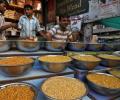
Retail tur dal prices on Monday shot up to Rs 200 per kg despite the government's steps to boost supply and check prices, aggravating consumers' woes.

The consumer affairs ministry on Tuesday expressed willingness to issue ISI mark licence for soft drinks provided the companies approach them on the matter, something they had failed to do so far.

Retail prices of three pulses -- tur, moong dal and urad -- are on a declining trend after the government took coordinated actions with state governments to check hoarding, the Food and Consumer Affairs Ministry said on Friday. "The upward pressure on retail prices of tur, moong dal and urad has stabilized in 2021 and is on a stable or declining trend," it said in a statement. According to the ministry, the average increase in prices of these three pulses during April to June 16, 2021 was 0.95 per cent as compared with previous three months (January-March, 2021).

The finance ministry on Wednesday reimposed expenditure curbs on ministries and government departments for July-September quarter. There will be no spending restrictions on the ministries of health, rural development, agriculture, MSME (micro, small and medium enterprises) and railways as part of a two-pronged strategy. "The existing guidelines for expenditure control have been reviewed. "Keeping in view the evolving situation arising out of Covid-19 and anticipated cash position of the government, it is felt essential to regulate Quarterly Expenditure Plan (QEP)/Monthly Expenditure Plan (MEP) of specific ministries/departments for July-September, 2021," the Department of Economic Affairs in the finance ministry said in a notification.
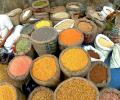
Prices of food items like cereals, pulses, and edible oils rose or remained steady in May, a Reserve Bank of India (RBI) report said, indicating there could be another higher inflation print. However, it observed that the Monetary Policy Committee's (MPC's) surprise move to increase interest rates bodes well for its credibility. The RBI's monthly State of the Economy report, released on Tuesday, citing high frequency food price data from the Ministry of Consumer Affairs for the period May 1-12, said the increase in the prices of cereals was primarily because of the surge in wheat prices.
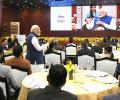
Pant, a 1991-batch Indian Administrative Service officer of Rajasthan cadre, is currently secretary in the ministry of ports, shipping and waterways.

The health and family welfare ministry spent 70 per cent of its allocation till October. The ministry may need additional funds for the vaccination drive which is expected to be kicked off from January.

The grievance redressal mechanism of many big e-commerce players is not up to the mark as the number of complaints received by the National Consumer Helpline has risen sharply over the last four years, Consumer Affairs Secretary Rohit Kumar Singh said on Thursday. Addressing an event organised by the Public Affairs Forum of India (PAFI), Singh said the number of complaints registered on the National Consumer Helpline (NCH) has gone up to 90,000 in November compared to 40,000 in the same month last year. "Four years back, the number of complaints pertaining to e-commerce transactions was 8 per cent of the total complaints.

Candidates will be short-listed for interview on the basis of the information provided by them in their online application, the statement said.

Paswan, one of India's most prominent Dalit leaders and eight-time Lok Sabha MP died on Thursday at the age of 74.
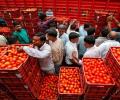
All India average retail tomato price, which has shot up by 63 per cent to Rs 67 per kg over the last year due to unseasonal rains, are likely to soften from December with the arrival of fresh crop from northern states, the government said on Friday. In the case of onions, retail prices have substantially subsided below to the level that prevailed in 2020 and also 2019, it said. "Tomato arrivals from north Indian states will start from the beginning of December itself, which will add to availability and lead to fall in prices.

Over 65 Union ministers are likely to take oath, going by the visual of the meeting Modi held with his likely council of ministers.
To prevent hoarding and check price rise, the Centre on Friday imposed stock limits on all pulses, except moong, held by wholesalers, retailers, importers and millers till October. The stock limits are imposed with immediate effect. An order in this regard has been issued by the Union food and consumer affairs ministry. Retail prices of pulses rose by more than 20 per cent during the January-June period of this year, according to the ministry's data.

'If it doesn't, it will continue with measures to infuse liquidity, signalling a new cycle,' predicts Tamal Bandyopadhyay.

Studies have shown that milk is the most common form of adulteration in India

"The national flag will be flown at half mast on October 9 in Delhi and capitals of all states and UTs where it is regularly flown, and also on the day of the funeral at the place where the funeral takes place," a home ministry spokesperson said.

Not displaying the mandatory information, including country of origin, on products sold on their platforms in India, draws government's attention.

'If the mandis were not working in Delhi, or the onion market in Nashik got affected, or there were disruptions because of unloading or loading in any sector in south India, we intervened.'
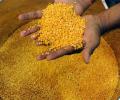
At an average national price of Rs 90 a kg in the retail market, it shows a jump by 20% in the last two months.
The guidelines, which have made service charge "totally voluntary and not mandatory", will be sent to states for necessary action

The proposed amendments to the Consumer Protection (E-Commerce) Rules, 2020, that are envisioned to protect consumer interests, may further compound the impact of multiplicity of regulations on the e-commerce sector, the Indo-American Chamber of Commerce (IACC) had told the ministry of consumer affairs. IACC, the apex bilateral chamber for Indo-US business, had told the government that the proposed amendments would increase compliance liabilities that risk severely impairing the growth of the sector.

Making the announcement, the Ministry of External Affairs said on Tuesday that India will hold the G20 presidency from December 1, 2022, and will convene the G20 leaders' summit in 2023 for the first time.

Making a weak opening, shares of FTIL further tanked 45 per cent to Rs 105.5 -- its fresh 52-week low on the BSE.

In fresh troubles for Nestle over safety standards of its famous Maggi noodle brand, the Uttrakhand Food Safety Department has collected samples of the 'two-minute' noodles from the company's Pantanagar plant and other places in the state.
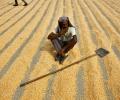
Recommends delisting of chana futures, open to lowering sugar import duty
For the first time, the government is considering the merits of a tariff policy to contain prices that could include allowing external agencies to import commodities and cultivating some essential crops overseas. An inter-departmental team from the ministries of finance, food and consumer affairs and commerce has been asked to work out a strategy to this effect.The finance ministry's department of economic affairs has submitted its views and a final paper is under preparation
The government on Monday exempted importers of pulses from stock limits, and also relaxed the norms for millers and wholesalers, in view of softening of prices of the key pulses in the country. Now, the stock limits will be applicable only on tur, urad, gram and masoor for a period up to October 31, it said. However, these entities will continue to declare their stocks on the web portal of the Department of Consumer Affairs, it added. A revised order in this regard has been notified.
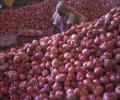
There was a delay in sowing of kharif onion because of late arrival of monsoon and later floods in many states damaged the crop.

The decision will come into effect on September 19. In the notification issued by the ministry of consumer affairs, food and public distribution, three weeks was given for so reducing the stock.

Fifteen Cabinet ministers and 28 Ministers of State were sworn-in by President Ram Nath Kovind at a ceremony at Rashtrapati Bhavan on Wednesday evening.
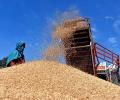
The government has no plans to import wheat as it has sufficient stocks to meet the country's requirements, official sources said. The Food Corporation of India (FCI) has enough stock for public distribution, they added. "There are no plans to import wheat into India. "The country has sufficient stocks to meet our domestic requirements," a source said.

Breaking a long tradition, the PMO has ensured that specific divisions in each ministry are allocated to junior ministers.

The company spokesperson expressed disappointment with the "unprecedented step of filing of a complaint before the NCDRC"
In a bid to further cool down edible oil prices and curb hoarding, the Centre on Friday extended stock limits on edible oils and oilseeds till June 30. Besides, the government has specified the stock limits that have to be imposed by states that have not implemented the earlier order on the limits. In October 2021, the ministry of consumer affairs had imposed stock limits till March 2022 and left the decision to states to decide on the stock limits based on available stock and consumption pattern.
A 6-7 million tonnes shortfall in rice production due to a fall in paddy sowing area is likely to keep rice prices at elevated levels, adding to the inflationary pressure that the slowing economy is already grappling with. Elevated food prices, including that of cereals, had led to retail inflation reversing a three-month declining trend, to touch 7 per cent in August. Similarly, the wholesale price inflation, which declined to 11-month low, also showed price pressures from cereals resulting from wheat output being impacted by severe heat waves in some parts of the country.

Currently, onion is being sold at Rs 36 per kg in retail markets of the national capital and Rs 32 per kg each in Mumbai, Kolkata and Chennai, according to the Consumer Affairs Ministry that monitors prices of 22 essential food items.

Five days after the induction of 18 ministers into his cabinet, Maharashtra Chief Minister Eknath Shinde on Sunday allocated portfolios, keeping Urban Development and 11 other ministries with himself, while giving the crucial Home Department to Deputy CM Devendra Fadnavis.
 © 2026 Rediff.com - Advertise with us - Disclaimer - Privacy Policy - Sitemap - Feedback - About us - Terms of use - Grievances